The event that initiates the observed failure sequence.
The executive thesis
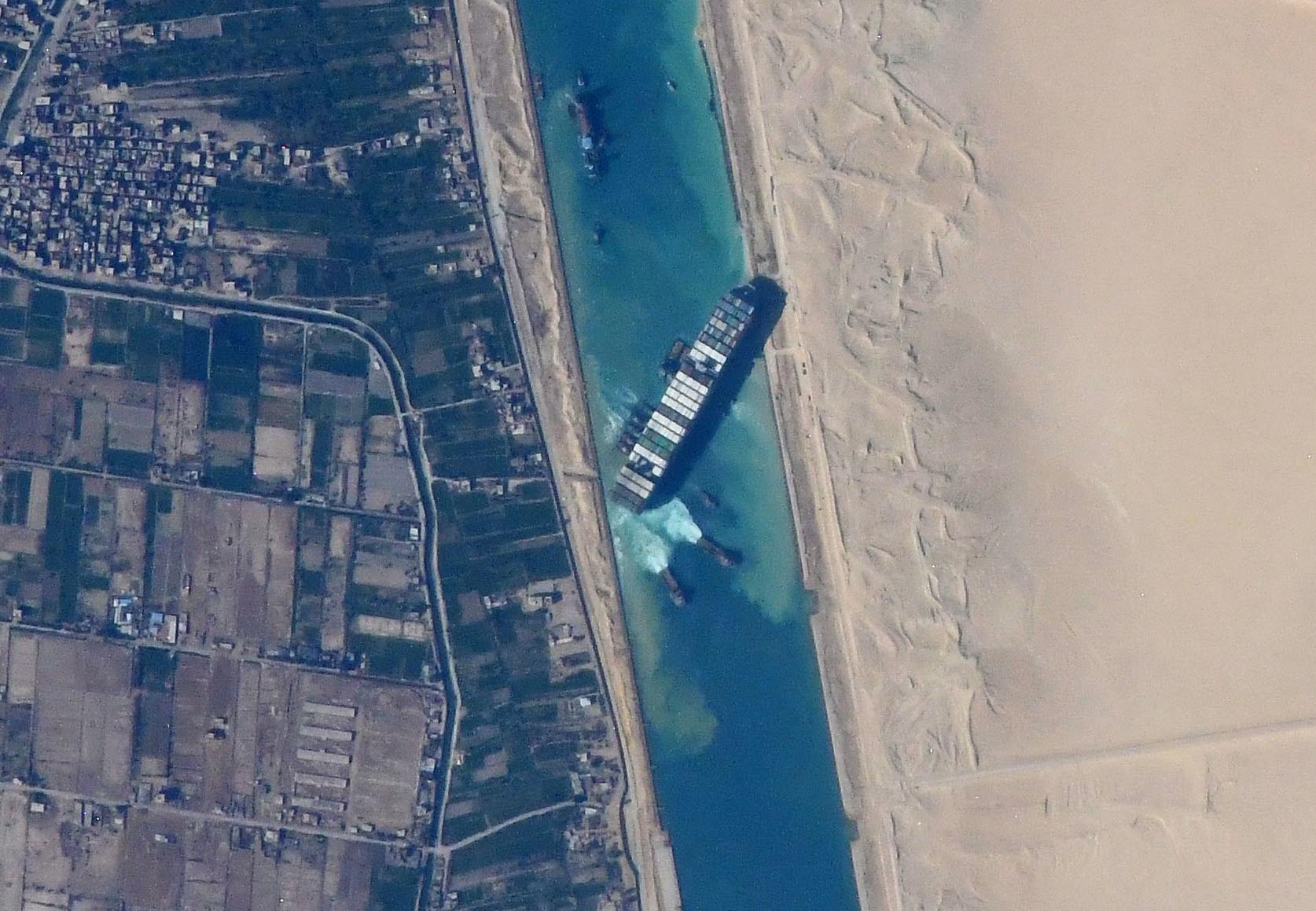
On 23 March 2021 the Ever Given, a roughly 400-metre container vessel of about 20,000 TEU capacity, grounded in the southern section of the Suez Canal. It remained lodged across the channel until 29 March.
The immediate event was local: one vessel, one navigational failure, one blocked channel. The consequential event was not. Zero corridor capacity produced hundreds of delayed vessels, disrupted schedules, port congestion, container displacement, inventory delays, freight-rate pressure, commodity volatility, additional emissions, insurance claims, legal disputes and a geopolitical reassessment of maritime chokepoints.
The Ever Given did not create the vulnerability. It activated it.
The vulnerability already existed in the architecture of global trade: traffic concentrated through a small number of maritime chokepoints, growing dependence on mega-container ships, single-lane sections with limited recovery options, highly synchronised shipping networks, low-buffer supply chains, container and port systems already stressed by COVID-19, weak redundancy between alternative routes, fragmented operational and legal responsibility — and an economy optimised for throughput efficiency rather than disturbance absorption.
The International Transport Forum had warned years earlier that mega-ships generate economies of scale for carriers while simultaneously creating larger traffic peaks, higher infrastructure requirements, greater cargo concentration and increased supply-chain risk. The Ever Given was therefore not merely an accident. It was a structural stress test.